
In-Mold Electronics (IME) inks: plastisol, from printed film to injected part
What an in-mold electronics ink must withstand, from flat printing to thermoforming and overmolding, and how to qualify it for plastic parts.
Read
The VFP Ink Technologies technical notebook: field experience reports, formulation analyses, regulatory updates and material innovations.
10 articles
What an in-mold electronics ink must withstand, from flat printing to thermoforming and overmolding, and how to qualify it for plastic parts.
Read
Why e-textiles call for a stretchable conductive ink, how to print a circuit on fabric or film, and what to qualify before production.
Read
Identification, authentication, sensors, traceability: what printed electronics brings to smart packaging, and what those functions demand from inks in production.
ReadWhy silver, how conductivity is measured, what low-temperature curing offers and where silver conductive inks are used.
Read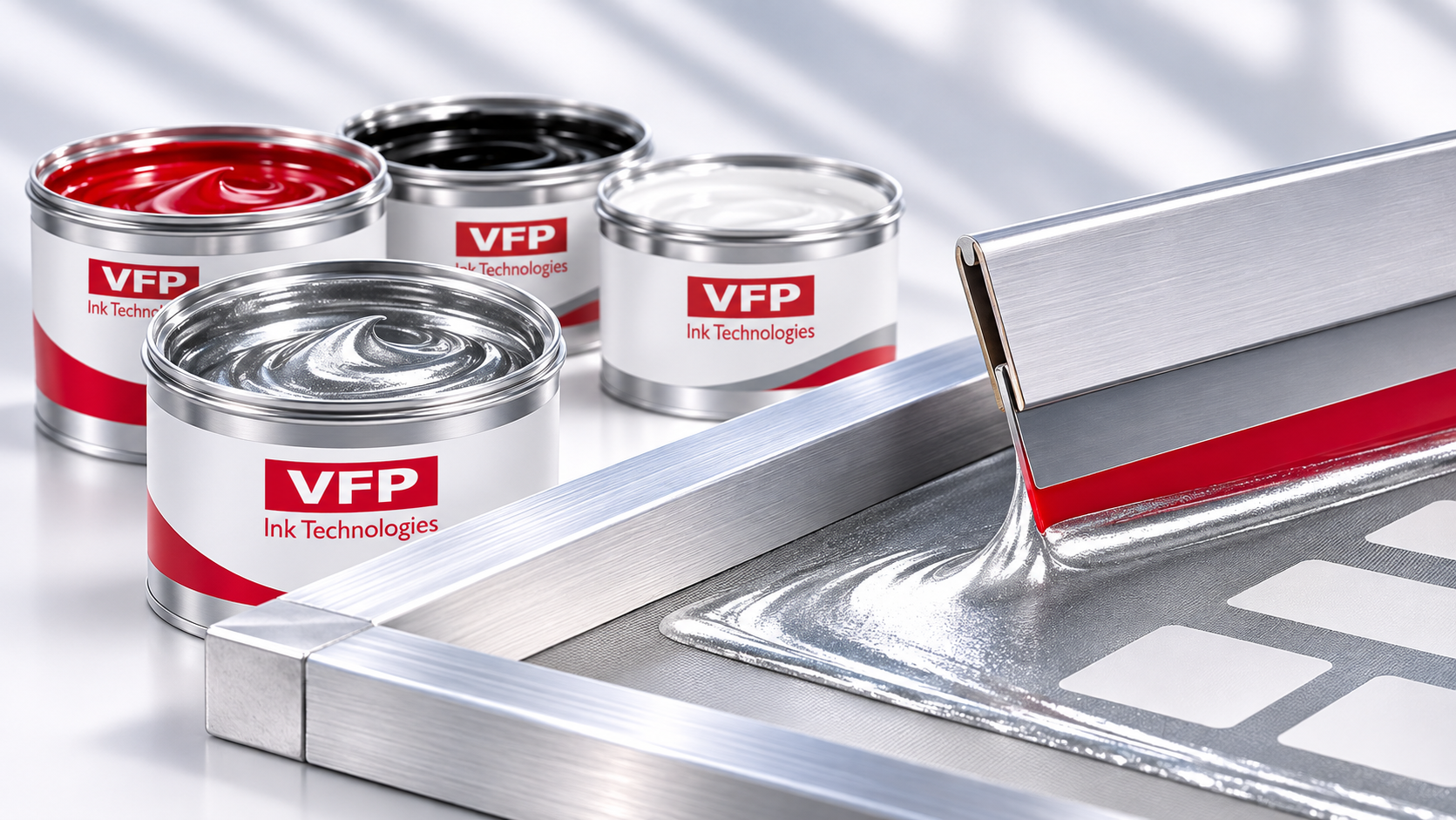
Why screen printing is the go-to process for depositing silver conductive inks, and which VFP ink families to choose for each application.
Read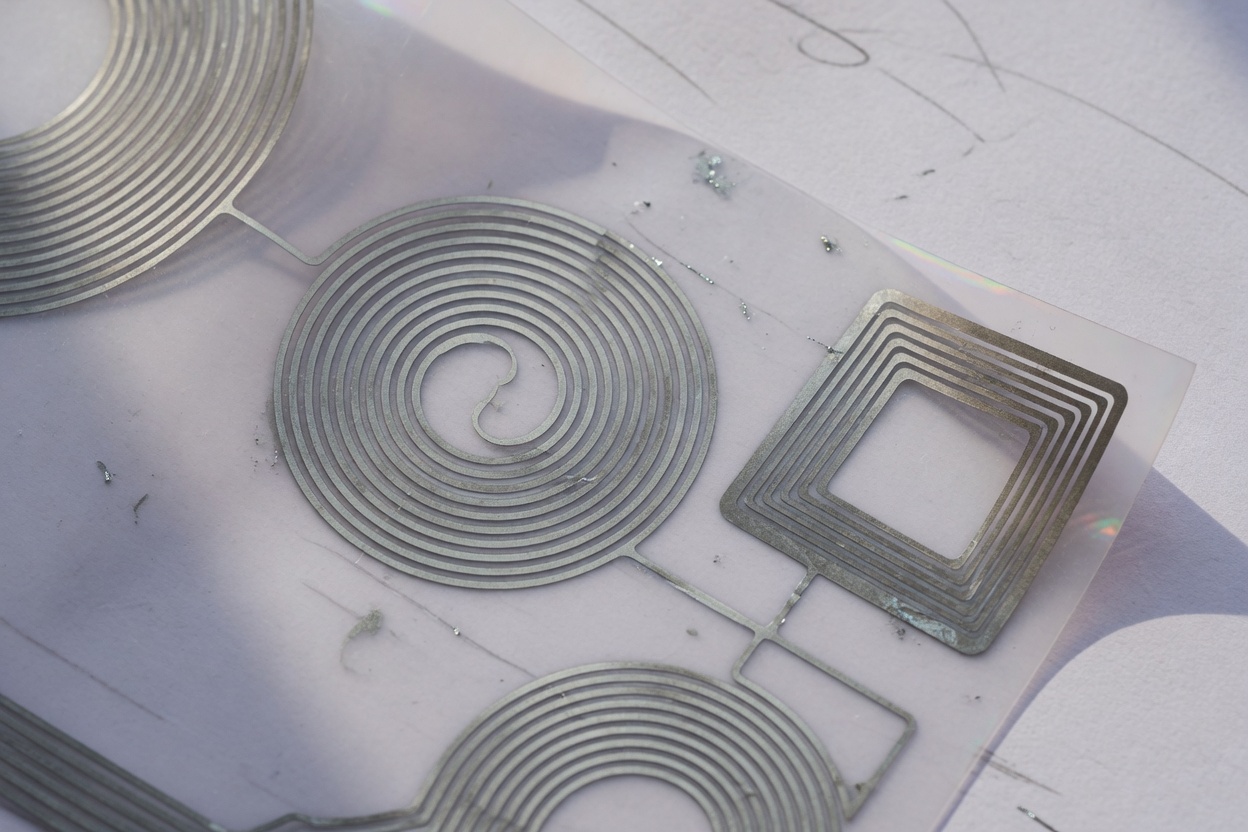
How roll-to-roll screen printing and conductive inks produce RFID and NFC antennas directly on films and paper for smart packaging.
Read
Why screen-printed electrodes dominate electrochemical biosensors: the silver, carbon and dielectric ink stack, ink requirements and applications.
Read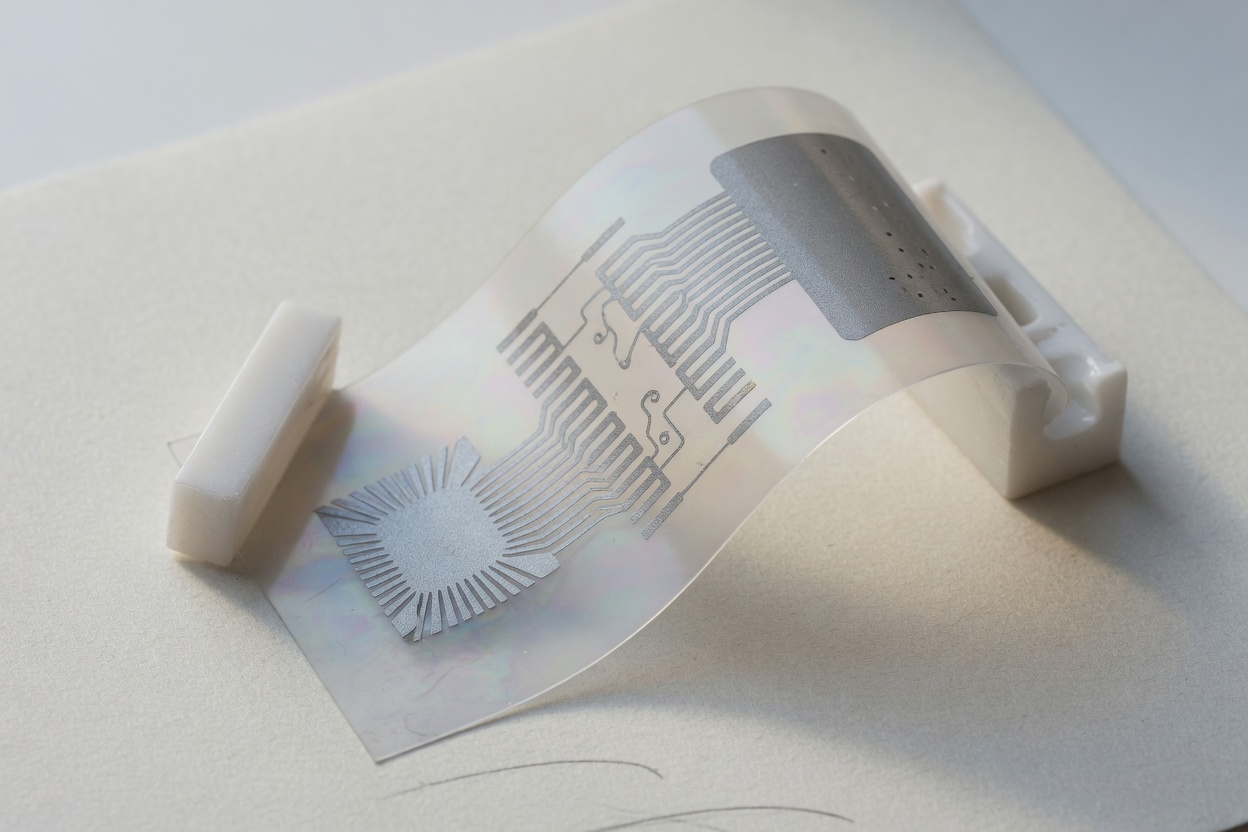
What piezoelectric ink is, the PVDF and P(VDF-TrFE) chemistries, the print, anneal and poling process, and its integration into a printed stack.
Read
VFP Ink Technologies presents its strategic shift toward inks and varnishes for printed electronics.
Read