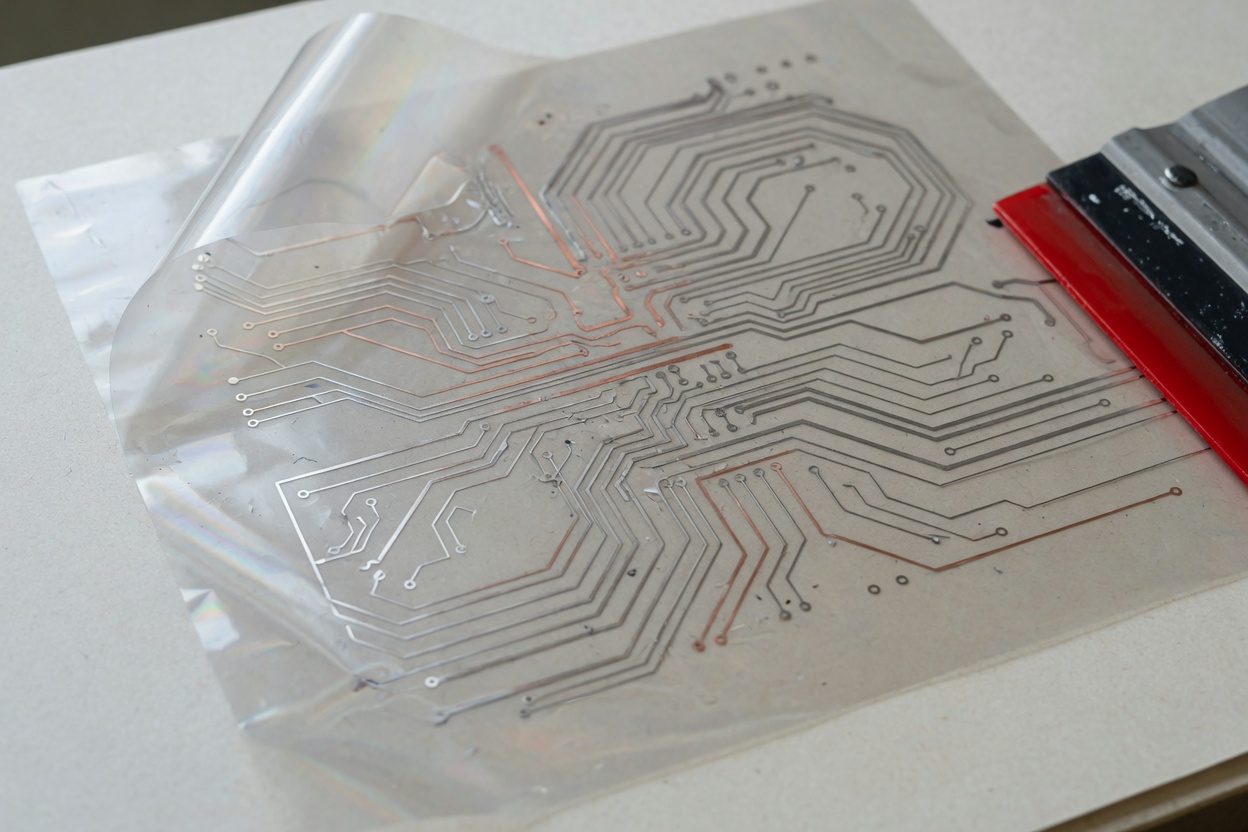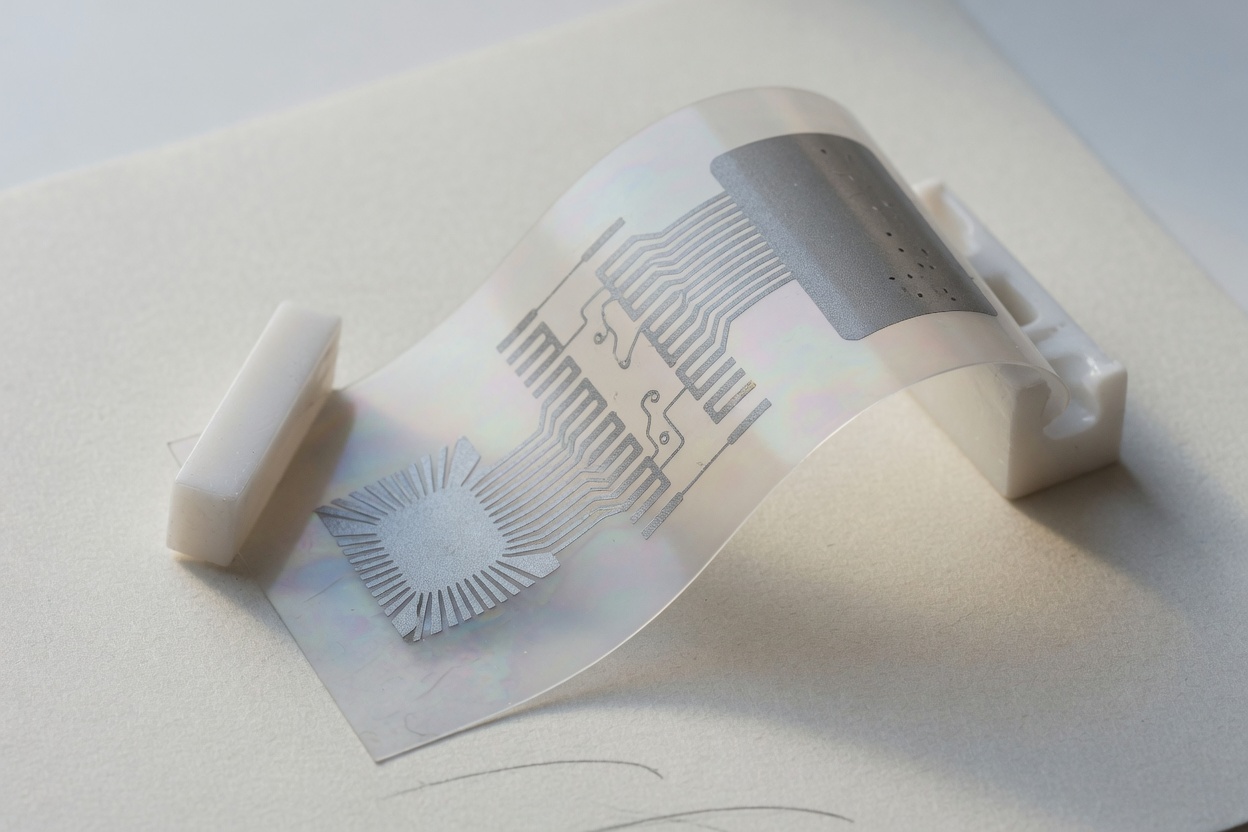
Screen-printed electrodes are the backbone of modern electrochemical biosensors: they account for an estimated 80 percent of the electrochemical biosensor segment, according to market analyses, because screen printing turns a precise electrochemical cell into a disposable, low-cost strip that can be made by the million. A biosensor converts a biological event, an enzyme reaction or an antibody binding, into a measurable electrical signal, and the electrode is where that conversion happens. The performance of the whole device, its sensitivity, its reproducibility and its shelf life, is set largely by the inks printed on the strip.
A large and fast-growing market
The numbers explain the industrial interest. The global biosensors market is estimated at around 34.5 billion USD in 2025 and is growing at a compound annual rate of roughly 9.5 percent, according to Grand View Research. Within it, electrochemical detection dominates, and screen-printed electrodes are its preferred format because they combine analytical performance with the economics of high-volume printing. Glucose test strips alone represent a huge installed base, and the same architecture now serves a widening range of targets.
The printed electrode stack
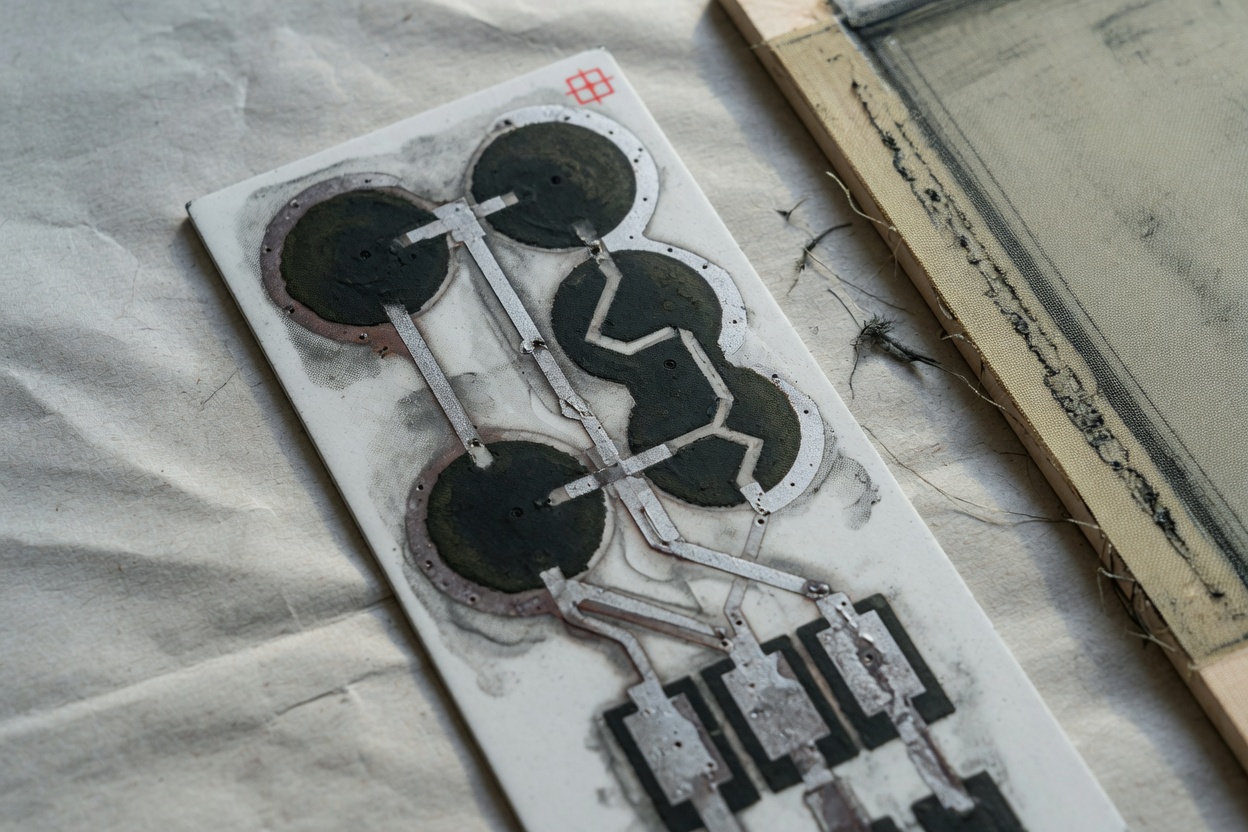
A typical screen-printed electrode is built from three functional inks deposited in sequence. A silver or silver/silver chloride (Ag/AgCl) layer forms the reference electrode and the conductive tracks, providing a stable, known potential. A carbon ink forms the working electrode, where the analyte is oxidised or reduced; carbon is chosen for its wide potential window, its low background current and its chemical inertness. A dielectric ink is printed last to insulate the tracks and define the active electrode area precisely, which is what makes results reproducible from strip to strip. On top of this base, a biological recognition layer, an enzyme such as glucose oxidase, an antibody or a DNA probe, is deposited to give the sensor its specificity.
What the inks must deliver
The electrochemical performance of a screen-printed electrode is only as good as its inks. Purity is critical: trace metallic or ionic contaminants create background currents and parasitic peaks that bury the signal of interest. Reproducibility matters even more than peak performance: in a disposable strip, every unit must behave the same, so batch-to-batch consistency in particle size, solids content and rheology is non-negotiable. The carbon ink must offer a wide, clean electrochemical window so the target reaction is not masked by the breakdown of the electrode itself or of the supporting electrolyte. The Ag/AgCl ink must hold a stable reference potential through storage and use. And every layer must adhere to the substrate and to each other through handling, packaging and the wet environment of the measurement.
Applications, from glucose to the environment
Self-monitoring of blood glucose remains the flagship application and proved the model: a printed enzyme electrode, mass produced, read by a handheld meter. The same platform now underpins point-of-care diagnostics, where rapid tests detect biomarkers from a drop of blood or saliva in minutes, and environmental monitoring, where electrodes measure heavy metals, pesticides or pathogens in water and soil. Food safety and wearable sweat sensors are extending the format further. In each case the appeal is identical: a screen-printed strip is cheap enough to be single use, which removes cleaning, cross-contamination and recalibration from the workflow.
Mass production at low cost
Screen printing is what makes the disposable biosensor economically possible. It deposits well-defined, repeatable layers at high speed, on flexible substrates, with very little material waste, and it scales from pilot sheets to roll-to-roll volumes without changing the underlying chemistry. The thickness and edge definition that screen printing delivers in a single pass are exactly what an electrochemical cell needs: a controlled active area and a robust conductive track. This is why the technique, decades old in graphics, has become the manufacturing standard for printed sensors.
The non-CMR angle for medical use
When a sensor touches blood, saliva or skin, or ends up in clinical and environmental waste, the chemistry of its inks is not a detail. Formulating without CMR-classified substances, which are carcinogenic, mutagenic or toxic for reproduction, reduces regulatory friction, protects production operators and lowers the toxicological risk profile of a device destined for medical and diagnostic use. For biosensors produced in very large volumes and often discarded after a single measurement, that safer chemistry is a meaningful advantage rather than a marketing line.
Working with a formulator
The gap between a promising electrode design and a manufacturable strip is closed by the inks. Carbon grade, silver loading, dielectric definition and rheology all have to match the substrate, the printing line and the biological layer that follows. VFP Ink Technologies formulates screen printing conductive and dielectric inks with a non-CMR approach and adapts each formulation to the customer's electrode design and process. Share your biosensor specification and we will help you build the right printed stack.