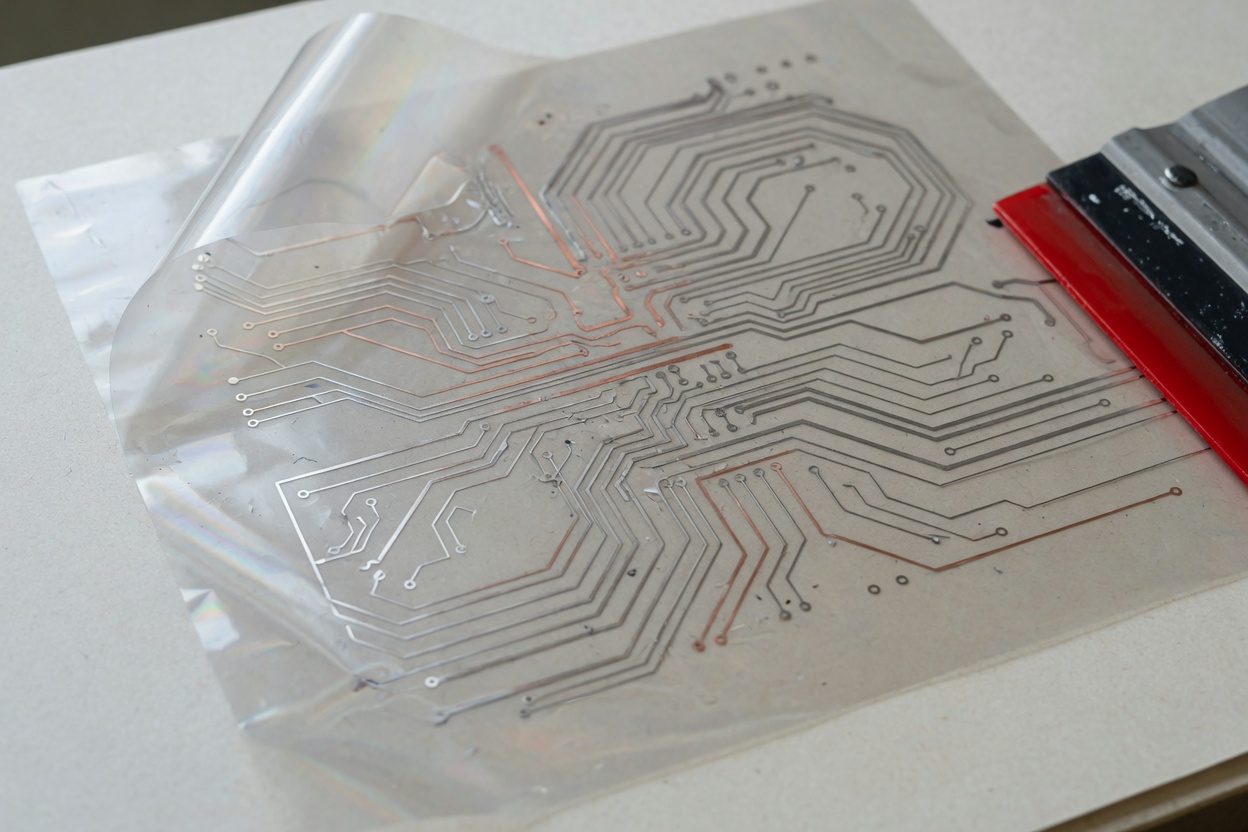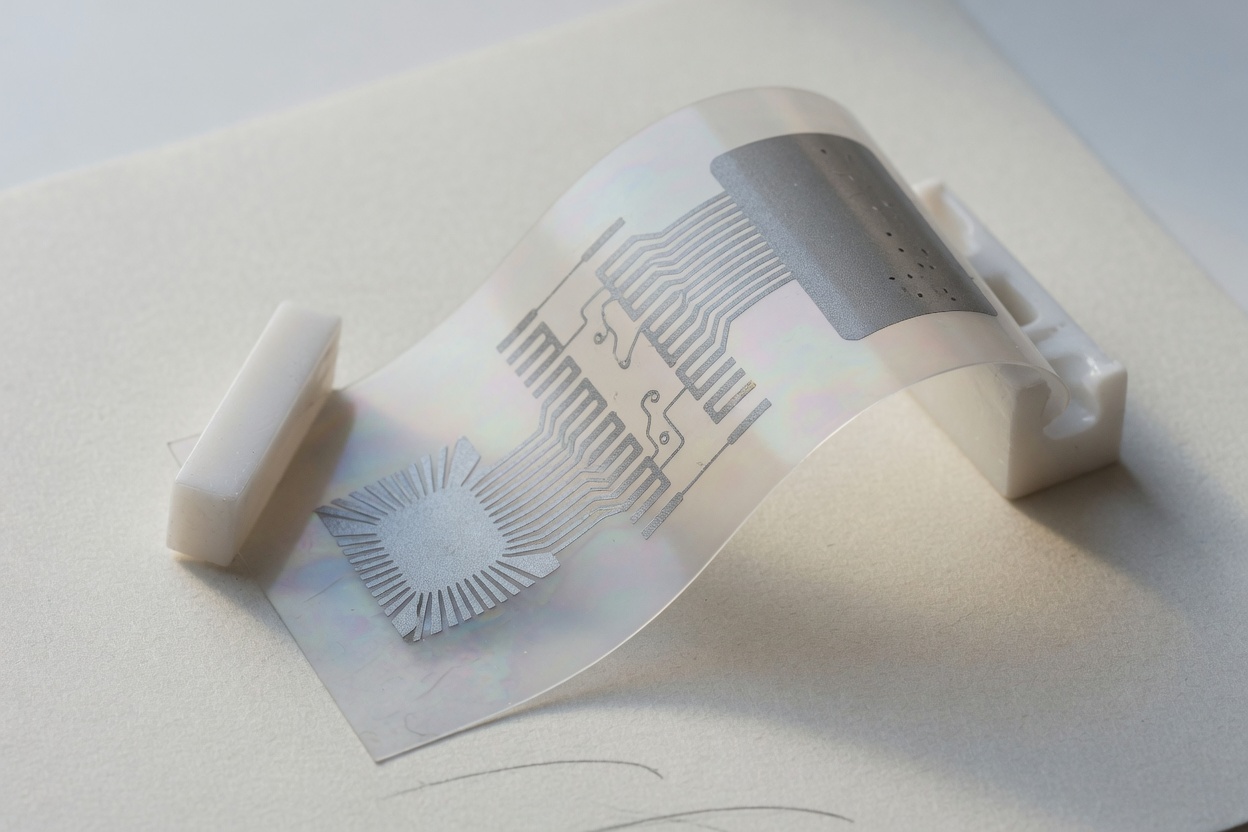
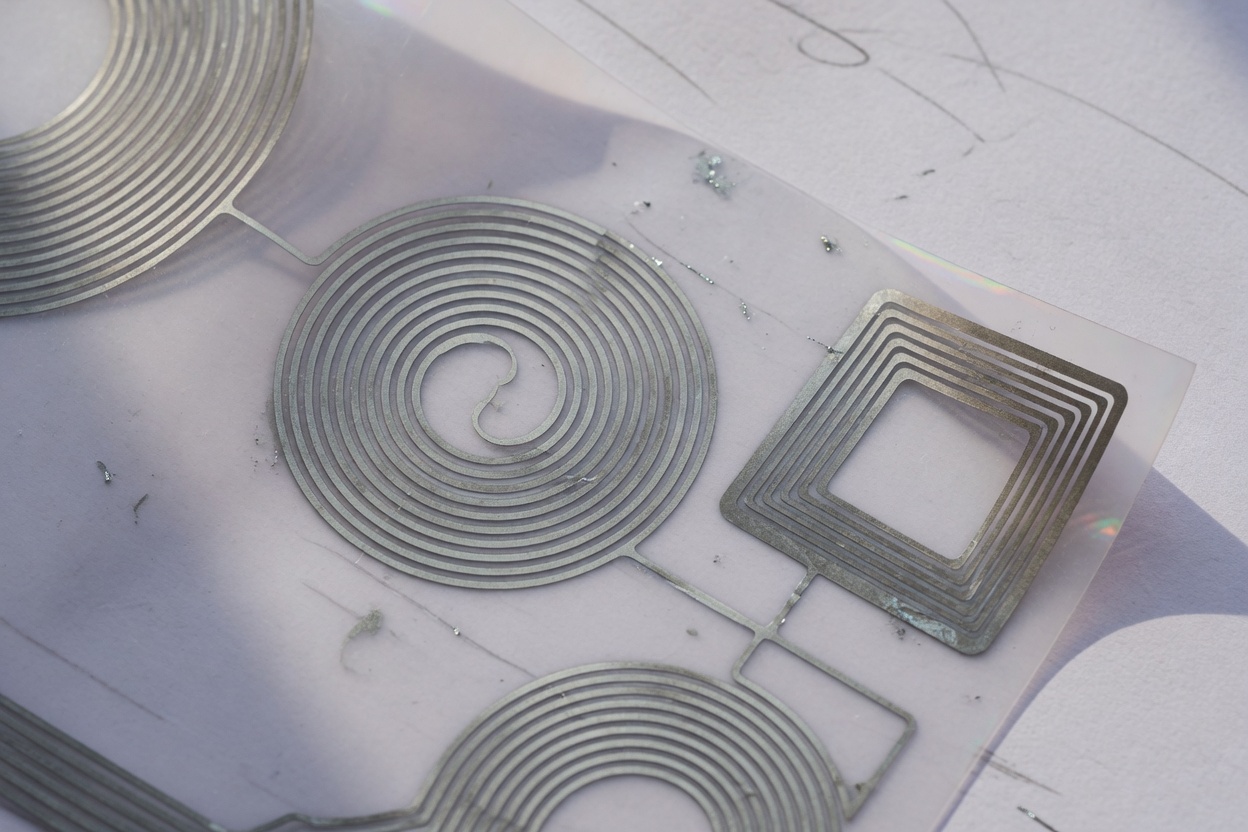
Printed RFID and NFC antennas are produced by depositing a conductive ink, most often silver-based, directly onto plastic films or paper using screen printing. Compared with etched aluminium antennas, printing is additive: it lays down metal only where the antenna needs it, generates far less chemical waste and slots naturally into roll-to-roll label converting lines. For smart packaging projects, that means the antenna can be printed in line with the label itself, at high speed, on the same substrates converters already run. The performance of the finished tag then rests almost entirely on the ink: its resistivity, its adhesion and its behaviour through die-cutting and lamination.
A market pulled by smart packaging
The momentum behind printed antennas is not speculative. According to market analysts, the printed and chipless RFID market is estimated at 7.36 billion USD in 2025 and is forecast to reach 47.9 billion USD by 2035, a compound annual growth rate of 20.6 percent. The pull comes from item-level tagging in retail and logistics, anti-counterfeiting and brand protection, regulatory traceability initiatives such as the European digital product passport, and consumer engagement through NFC-enabled packs. Each of those use cases shares the same economic constraint: the tag must cost almost nothing, which is exactly the promise of printing antennas instead of etching them.
What the antenna has to deliver
An NFC antenna is a printed coil tuned to 13.56 MHz; a UHF RAIN RFID antenna is typically a dipole operating around 860 to 960 MHz. In both cases, the read range and the reliability of the tag depend directly on the quality factor of the antenna, which is governed by the conductivity of the printed track. Higher resistance means more losses, shorter read distance and a narrower tolerance to detuning when the label is applied to a bottle, a carton or a film pouch. Antenna geometry can compensate for some of it, but the ink sets the ceiling: a poorly conductive track cannot be designed around.
Why screen printing dominates antenna production
Screen printing remains the workhorse of printed antennas because it deposits thick layers, typically several microns to tens of microns, in a single pass. Thickness matters: the cross-section of the track determines its resistance, so a process that lays down more metal per pass reaches the target with fewer steps. Rotary screen printing brings this capability to roll-to-roll production, where antennas are printed continuously on wide webs of PET, polypropylene or paper, then dried, die-cut and converted in line. Flexo and gravure can print finer, thinner features at higher speed, but for the low-resistance tracks that antennas demand, high solids screen printing pastes remain the reference.
What to demand from an antenna ink
A conductive ink for RFID and NFC antennas has to satisfy several requirements at once. Low sheet resistance after curing, achieved within the thermal budget of heat-sensitive films and papers, typically below 150 °C. Strong adhesion on PET, polypropylene and coated or uncoated paper, verified after the full converting sequence. Mechanical flexibility, because a label is bent, wound, die-cut and laminated before it ever reaches a pack. Compatibility with the next steps: chip attach adhesives, overlamination films and pressure-sensitive adhesives must all bond to or over the printed track without degrading it. Finally, a stable rheology that holds clean track edges at production speed, print after print, roll after roll.
Labels and packaging: where it all comes together
Smart packaging is, in practice, a label business. The antenna is printed on a label web, converted with standard equipment and applied like any other label, which is why label converters are the natural entry point for RFID and NFC volumes. This is familiar ground for VFP Ink Technologies: labels and packaging form one of the company's core markets, alongside printed electronics. The chemistry angle matters too. Packaging environments, including food-adjacent applications, push the industry toward safer formulations. Inks formulated without CMR-classified substances simplify regulatory conversations, protect press operators and remove a source of risk from the supply chain, without compromising on conductivity.
From datasheet to production roll
A datasheet value never guarantees a working tag. Resistance depends on the real substrate, the real dryer profile and the real deposit thickness on your press, which is why serious antenna projects start with pilot trials on the customer's stack. This is where working with a formulator rather than a catalogue pays off: solids content, rheology and curing profile can be adjusted to your web speed, your screens and your converting sequence. VFP Ink Technologies develops screen printing conductive inks for printed antennas with a non-CMR approach and supports trials from lab samples to production rolls. If a smart packaging project is on your roadmap, talk to us about your specification.