Silver-based conductive inks play a central role in the development of printed electronics. Recognised for their excellent electrical conductivity, stability and reliability, they make it possible to produce electronic circuits directly on a wide variety of substrates, including plastic films, flexible substrates and paper.
Used across many industrial sectors, these functional inks meet the growing demands for miniaturisation, flexibility and the integration of electronic functions into everyday products.
Drawing on its expertise in formulation and industrial screen printing, VFP Ink Technologies develops silver conductive inks tailored to the technical constraints and manufacturing processes of its customers, with particular attention to electrical performance, substrate compatibility and lower curing temperatures.
Why use a silver-based conductive ink?
Silver is recognised for its exceptional electrical properties. With a theoretical electrical conductivity of around 63 MS/m at room temperature, it is a benchmark for manufacturing conductive tracks and printed electronic components.
In a conductive ink formulation, the silver particles form an electrical network that allows current to flow after printing and curing.
The performance achieved depends on several parameters:
- The morphology and particle size distribution of the silver particles.
- The concentration of conductive fillers.
- The nature of the binder and the solvent system.
- The thickness of the printed deposit.
- The drying and curing conditions.
- The compatibility between the ink and the substrate.
Controlling these parameters makes it possible to obtain conductive tracks with low electrical resistance, good repeatability and excellent print quality.
For printed electronics manufacturers, the challenge is to select a formulation that delivers the required electrical performance while meeting the constraints of the manufacturing process.
Electrical conductivity: a key criterion for printed circuits
Electrical conductivity is one of the main characteristics of silver conductive inks.
In printed electronics applications, performance is generally assessed through sheet resistance, expressed in ohms per square (Ω/sq) and, where relevant, normalised to the deposit thickness.
In particular, low electrical resistance limits energy losses and ensures the efficient transmission of electrical signals.
The silver conductive inks developed by VFP Ink Technologies are formulated to meet different levels of requirements, from conventional electronic applications to devices that demand high electrical performance.
The SECTR range from VFP Ink Technologies illustrates this expertise, with formulations that can achieve a sheet resistance of 10 mΩ/sq/mil or less, depending on printing and curing conditions.
This performance opens up many possibilities for producing conductive circuits, sensors and functional electronic components.
Stability and reliability: decisive properties for industrial applications
Beyond initial conductivity, the stability of electrical performance is a major challenge in the development of printed electronic devices.
Conductive circuits can be subjected to various stresses during use:
- Temperature variations.
- Exposure to humidity.
- Mechanical stress.
- Contact with certain chemical agents.
- Repeated operating cycles.
Silver-based conductive inks offer particularly valuable properties for applications that require stable, long-lasting conductivity.
However, the reliability of a printed circuit also depends on the ink formulation, its adhesion to the substrate, its curing conditions and its operating environment.
At VFP Ink Technologies, the development of functional inks takes all these parameters into account in order to offer solutions suited to industrial requirements.
Some formulations, notably SECTR, are designed to offer high chemical and thermal resistance while maintaining excellent electrical performance.
Low-temperature curing: an advantage for flexible substrates
The evolution of printed electronics goes hand in hand with the growing use of flexible and heat-sensitive substrates.
PET and PVC films and certain paper substrates require suitable manufacturing conditions in order to preserve their dimensional and mechanical properties.
In this context, low-temperature curing silver conductive inks are a particularly attractive solution.
They make it possible to produce functional electrical circuits while limiting the thermal stress applied to the substrate.
Depending on the formulation, VFP Ink Technologies silver conductive inks can be cured at temperatures suited to existing industrial processes.
For example, the SECTR range notably offers curing conditions starting from 50 °C.
These characteristics make it easier to integrate the inks into industrial screen printing processes and open the way to their use on a range of flexible substrates.
Lower curing temperatures can also help optimise the energy consumption of manufacturing processes, depending on the equipment and cycles used.
What are the applications of silver conductive inks?
Thanks to their versatility, silver conductive inks are used in many areas of printed electronics.
Printed electronic circuits
Screen printing conductive inks makes it possible to deposit electrical tracks directly onto rigid or flexible substrates.
This technology is used to manufacture printed electronic circuits for a range of industrial applications.
In particular, it enables the development of thin, lightweight electronic components that can be integrated into complex structures.
Printed sensors
Silver conductive inks play an essential role in the manufacture of printed sensors.
They are used to produce the electrodes, electrical connections and tracks needed to transmit signals.
These devices are used in industry, the automotive sector, connected equipment and certain monitoring devices.
Human-machine interfaces (HMI) and membrane switches
Printed control interfaces use conductive circuits to transmit electrical information.
Silver inks can be used to manufacture membrane switches, control panels and touch interfaces.
Their print quality and electrical performance contribute to the reliability of these devices.
Flexible electronics and conformable devices
Integrating electronic functions on flexible substrates is one of the main development paths in printed electronics.
Silver conductive inks designed to withstand bending or deformation make it possible to design circuits for flexible devices, and even thermoformable ones depending on the formulation.
These technologies open up new prospects for integrated electronic equipment, smart surfaces and functional components.
RFID and NFC antennas
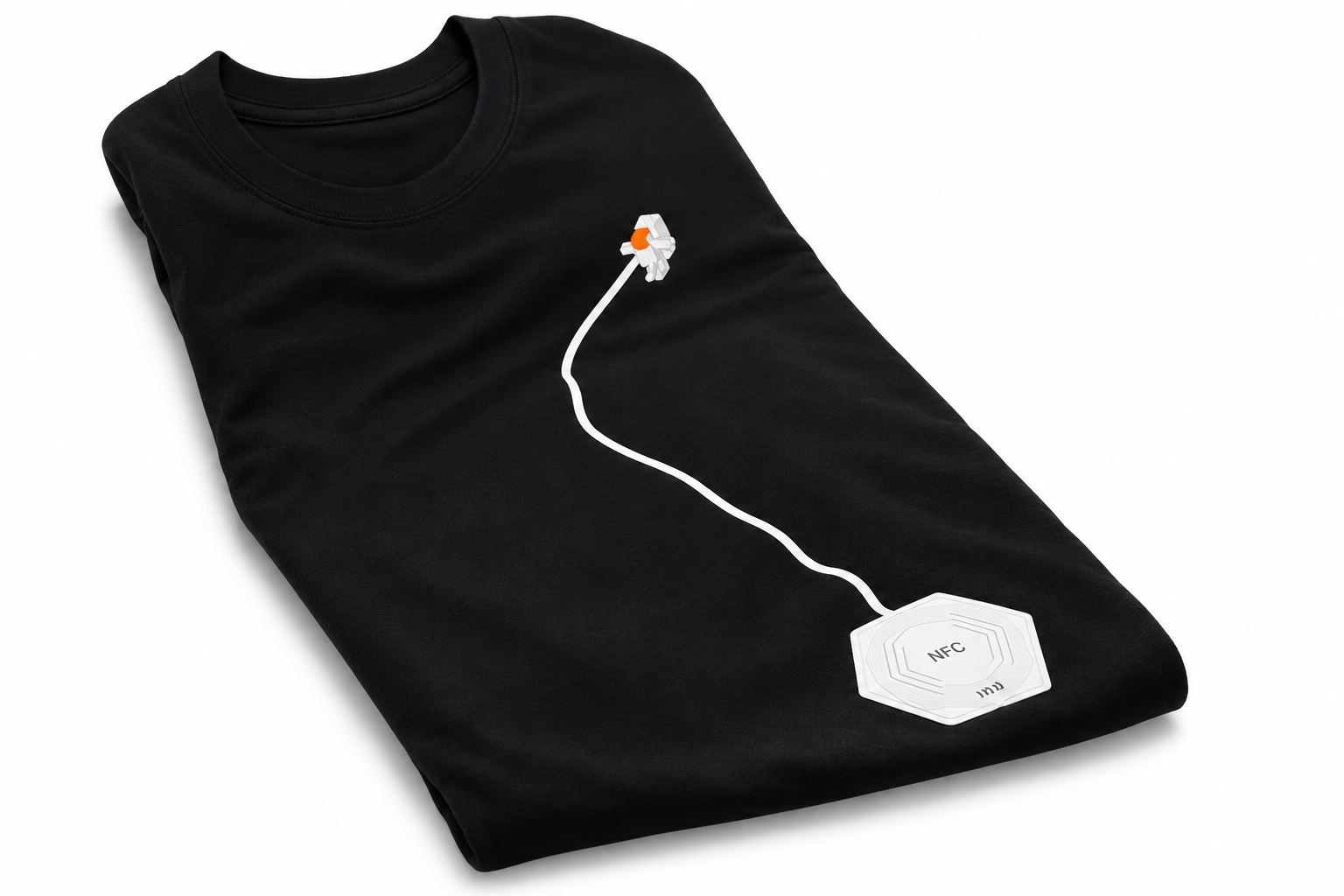
RFID and NFC technologies rely on conductive circuits capable of transmitting or receiving radio frequency signals.
Silver conductive inks can be used to print antennas and electrical connections on suitable substrates.
They thus contribute to the development of connected devices, identification systems and smart packaging.
Functional inks developed with a responsible approach
Changing regulatory and environmental requirements are leading manufacturers to look for solutions that combine technical performance with a reduced environmental impact.
VFP Ink Technologies builds these issues into its research and development approach.
In particular, the company favours the development of non-CMR formulations, meaning not classified as carcinogenic, mutagenic or toxic to reproduction, as well as optimising curing conditions and compatibility with existing industrial processes.
Some formulations, such as SECTR, also incorporate bio-based components.
This approach aims to support manufacturers of printed electronic devices in their innovation projects, while taking regulatory and environmental issues into account.
VFP Ink Technologies: your partner for silver conductive inks
Choosing a conductive ink is not just a matter of electrical conductivity.
It requires a comprehensive analysis of the project, covering the substrate, the printing constraints, the expected performance and the operating conditions of the final device.
A specialist in the formulation and manufacture of screen printing inks since 1994, VFP Ink Technologies develops solutions for printed electronics and demanding industrial applications.
Drawing on its research and development expertise, the company supports its customers in selecting, adapting and industrialising their functional inks.
Are you developing a printed electronic circuit, a sensor, a control interface or a flexible electronic device?
Contact the VFP Ink Technologies teams to identify the silver conductive ink suited to your application and your manufacturing constraints.