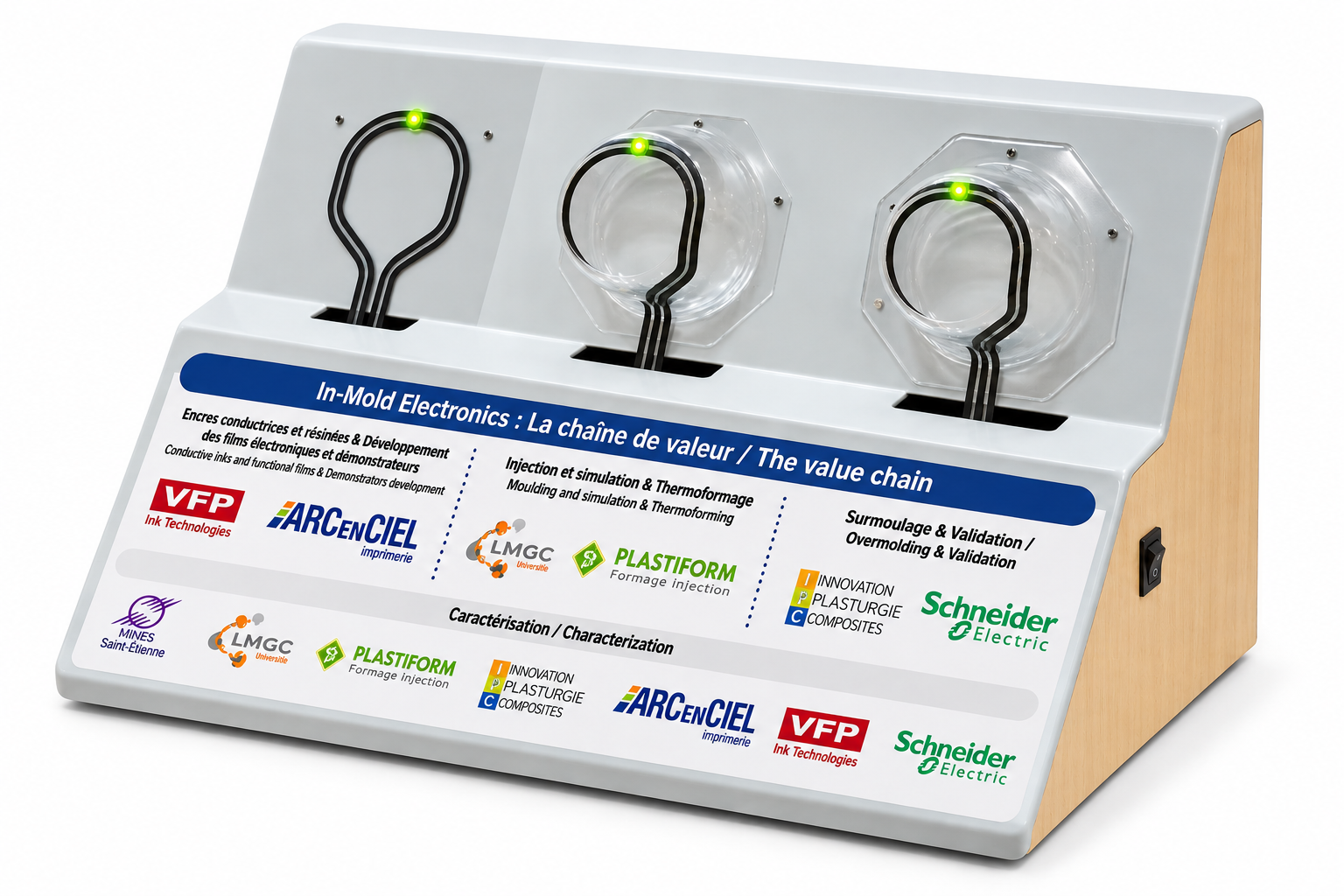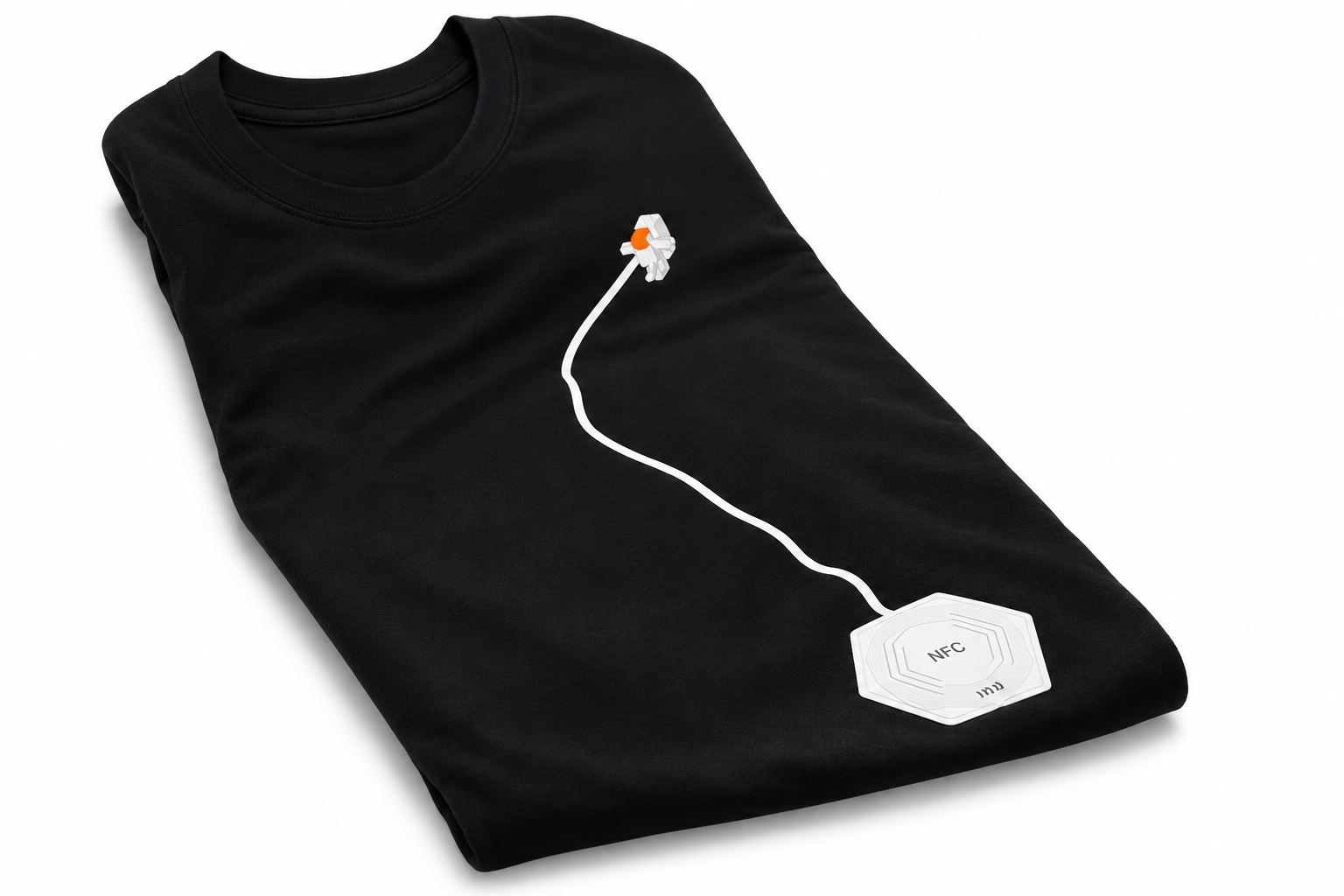

Printed electronics for smart packaging involves printing electrical functions directly onto the packaging or its label: conductive tracks, sensor electrodes, touch zones, opening detection loops. These functions enable the identification and authentication of a product, monitoring its condition, interacting with the consumer, and supporting traceability. They rely on functional inks (silver, carbon, dielectric, piezoelectric) deposited on paper, cardboard, or film, at costs and speeds compatible with packaging.
Active, smart, connected packaging: what are we talking about?
For food packaging, European law distinguishes two categories. Active packaging acts on the product, for example, by absorbing moisture or oxygen or releasing a substance. Smart packaging monitors the state of the packaged product or its environment: this is the definition of Regulation (EC) No. 450/2009 on active and intelligent materials and articles intended to come into contact with food. In the industry, smart packaging also encompasses connected and interactive packaging.
Not all of these functions are electronic. A time-temperature indicator that changes color relies on material chemistry; a QR code is just a simple graphic. Printed electronics come into play when information needs to be read by a device without a line of sight, recorded or transmitted, or when the packaging needs to respond to a gesture.
Identify, authenticate, and engage with the consumer
Identification is the most widespread function, supported by RFID and NFC labels. Their antennas can be printed; their specific requirements (resistivity, frequency matching, roll-to-roll screen printing) are detailed in our article Printed RFID and NFC Antennas: Conductive Inks for Smart Packaging.
Other functions operate without an antenna. A conductive loop printed on the opening area breaks on first use: the associated electronics know that a bottle or box has been opened, a need in pharmaceuticals, spirits, and luxury. A conductive pattern printed under the decoration, recognized by the touchscreen of a smartphone when the packaging is pressed against it, serves as an authentication code. Printed touch zones connected to a small module trigger a sound or light on a promotional box.
Printed sensors and indicators on packaging
A printed sensor combines a sensitive layer with electrodes that read its response. Interdigitated silver or carbon electrodes, combined with a layer that absorbs moisture, form a capacitive humidity sensor. A piezoelectric layer sandwiched between two electrodes generates a charge under pressure, allowing a shock or a press to be detected. VFP formulates this type of ink enabling the printing of these layers: the datasheet for PIEZO ELECTRON UV, a UV ink without PFAS, cites sensors on flexible substrates and roll-to-roll production among its applications.
For gas or freshness sensors, the sensitive layer deals with specific chemistry; the conductive inks form the electrodes and connections. Qualification is always done on the complete device, never on the ink alone.
Traceability and digital passport: the label as a support
European regulations push for data-bearing packaging. The eco-design regulation (ESPR) provides for a digital product passport, accessible via a data carrier placed on the product, its packaging, or its documentation; the packaging regulation (PPWR) accepts digital supports like QR codes for consumer information. A printed code remains the least expensive support. Electronics are justified when they provide what a code cannot: reading through cardboard, authentication, or memory of an event such as an opening.
In practice, these functions go through the label: printed and shaped in roll form, it is applied by existing labelers without modifying the packaging line. According to AWA, 76 billion square meters of labels were produced worldwide in 2025. Label presses already combine flexography, digital, and screen printing for thick deposits (opaque white, relief, Braille), as presented on our page UV Inks and Coatings for Labels and Packaging. Functional inks also require thickness. In a multilayer label, a dielectric varnish like ECV004, compatible with the Silver Electron range according to its datasheet, can serve as an insulating layer at track intersections, to be qualified on the actual stack.
Industrial constraints: cost, speed, substrates, compliance
Cost
A printed function must remain marginal in the cost of the packaging. Silver is the most expensive: it is only printed where low resistance is essential, with carbon handling resistive elements and contacts. The difference is clear on the datasheets: SILVER ELECTRON claims a resistivity of less than or equal to 15 mΩ/sq/mil, while CEL001 claims less than or equal to 120 Ω/sq/mil at 120 °C.
Speed
In roll-to-roll, drying or polymerization must fit within the length of the dryer at the speed of the machine. UV dielectric varnishes cure under lamp; for silver, the range includes a low energy curing reference, SILVER ELECTRON LOW ENERGY CURING, and a reference for flexography, FLEXOGRAPHY SILVER ELECTRON. In all cases, the actual cycle must be qualified at the speed of your line and on your substrate.
Substrates
Paper and cardboard are porous and rough: the surface condition affects the continuity of the track, which is why coated supports are beneficial. Dimensionally stable PET often serves as a base for inserts. Each VFP datasheet specifies the documented substrates. On polypropylene, the common film for labels, the adhesion of a functional ink is qualified through tests after surface treatment.
Compliance
Depending on the references, VFP electronic inks are classified as non-carcinogenic, mutagenic, or reprotoxic (non-CMR), and the piezoelectric inks PIEZO ELECTRON are also free from PFAS. Food contact and the end-of-life of the packaging depend on the entire structure: these are assessed from the design stage, reference by reference. VFP supports the selection, testing, and qualification of inks from sample to pilot run on your press.
Frequently asked questions
Does a chip need to be included to make packaging smart?
Not always. A colorimetric indicator or a conductive pattern read by a touchscreen can function without a chip. The chip usually becomes necessary as soon as the packaging needs to store a unique identifier, execute encrypted authentication, or record an event.
Can conductive ink be printed on paper or cardboard?
Yes, several VFP references are documented on paper and cardboard, including the SILVER ELECTRON range, CEL001, and the varnish ECV004. The conductivity obtained depends on the surface condition of the substrate and the deposit: a test on your paper will confirm the suitable reference.
Are functional inks suitable for food contact?
The answer depends on the structure: printed side, presence of a barrier, type of product, and duration of contact. Functional layers are most often placed on the outer face or inside a label. This question is addressed reference by reference: contact us with your packaging structure.
Which ink to choose for a printed function on packaging?
The choice follows the function: silver for low-resistance tracks and electrodes, carbon for resistive elements and contacts, a dielectric varnish to isolate intersections, a piezoelectric ink to detect pressure. A single smart label often combines several of these layers.
Related resources
Explore: Printed Electronics, UV Inks and Coatings for Labels and Packaging, Printed RFID and NFC Antennas, Conductive Inks for Printed Electronics. Discuss your project.