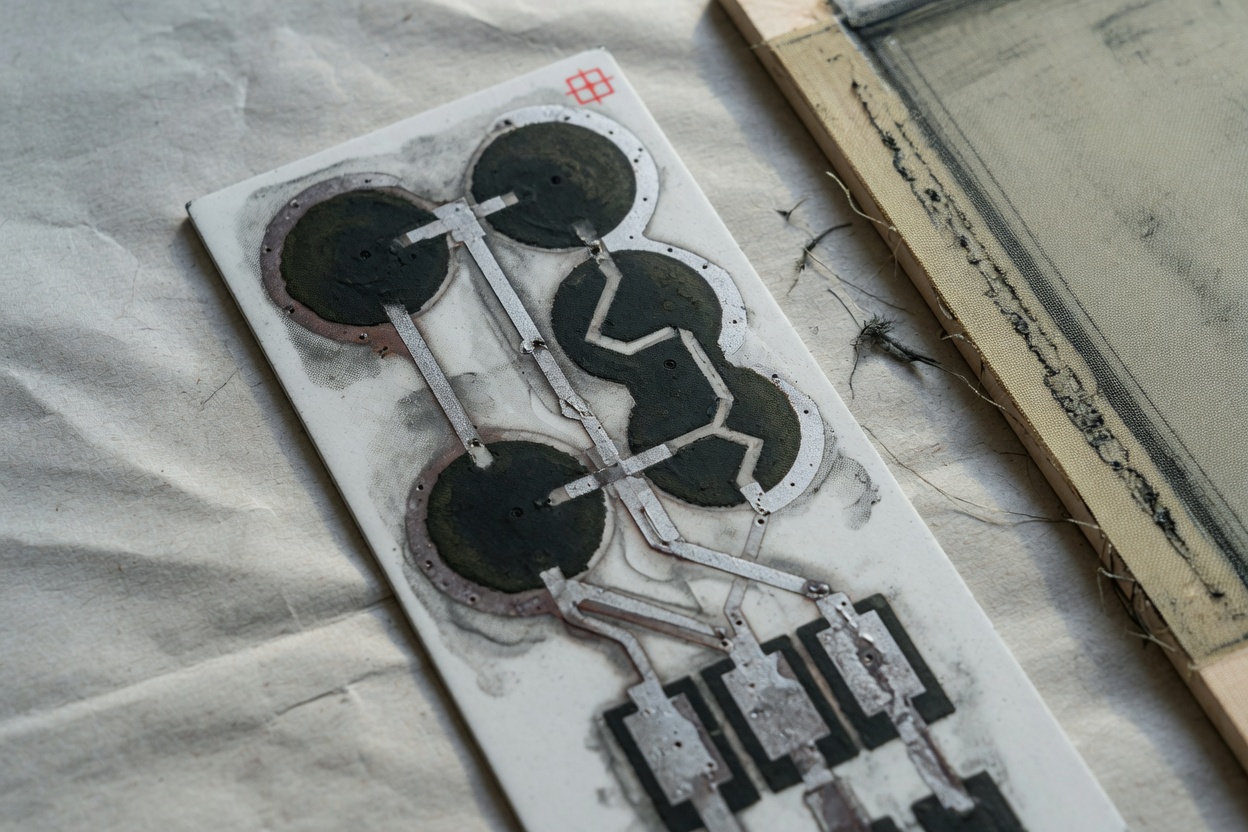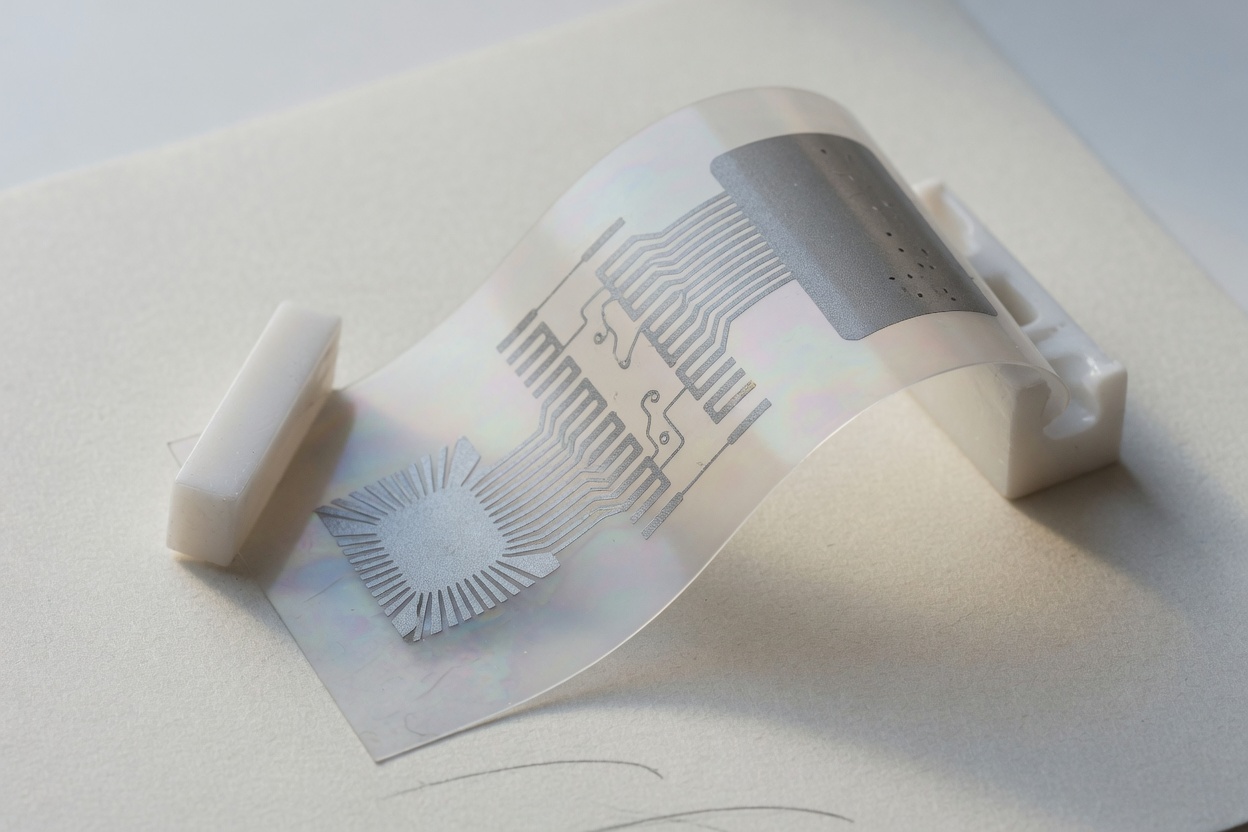
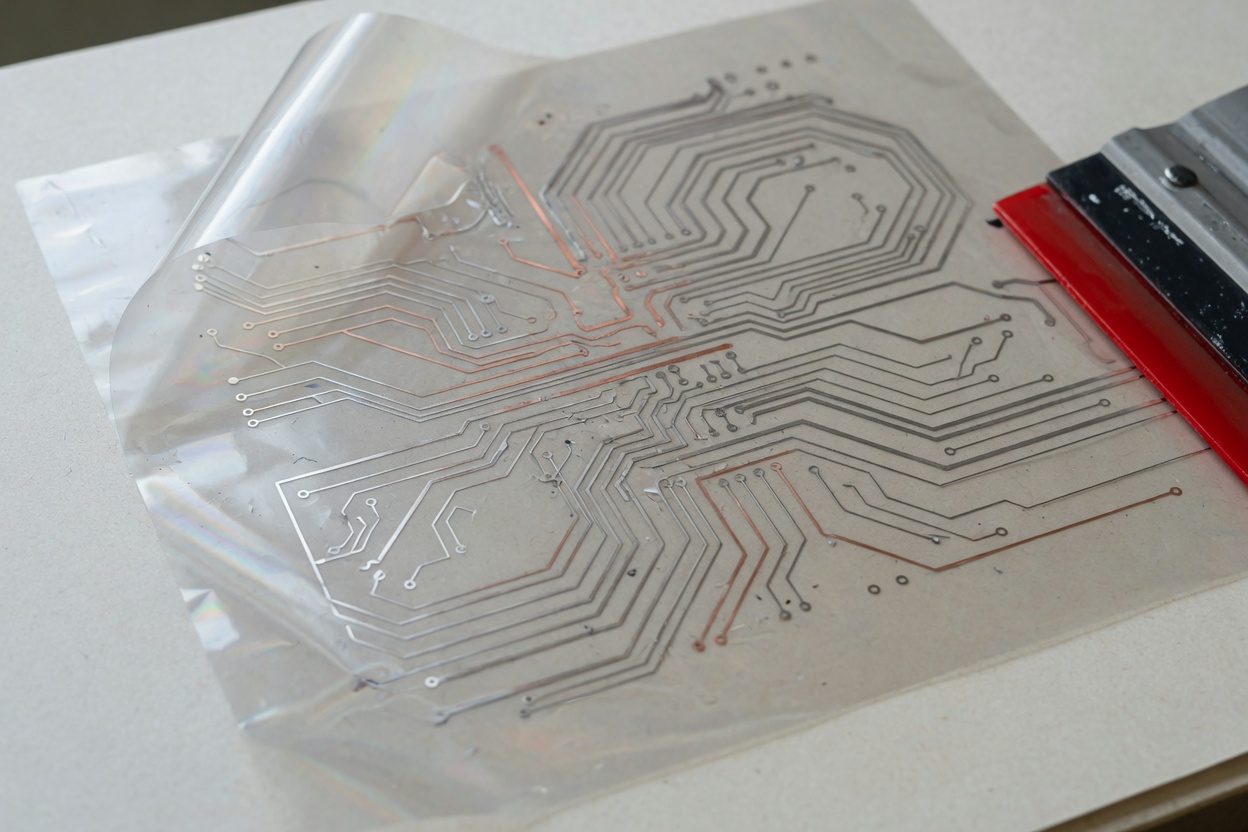
Choosing between silver and copper conductive ink comes down to one question: what does your specification actually require? Silver remains the reference when reliability and process simplicity matter most. It cures in air, tolerates humidity and keeps a stable conductivity over the life of the device. Copper offers a dramatic raw material cost advantage and is improving fast, but it oxidizes readily and demands a more controlled process. If your priority is qualification speed and long-term stability, silver is the safer starting point. If cost per printed square metre dominates the equation and your line can manage oxidation, copper deserves a serious evaluation.
Conductivity: closer than the price gap suggests
Both metals are excellent conductors. Bulk silver reaches about 63 MS/m, while bulk copper sits around 59 MS/m, roughly 95 percent of the value of silver. In a printed track, however, performance depends less on the metal itself than on particle morphology, solids loading, binder chemistry and curing profile. A well formulated silver flake paste cured on PET delivers low, repeatable sheet resistance with a standard hot-air tunnel. Copper pastes can approach comparable figures, but only when the sintering step is tightly controlled. In other words, the theoretical conductivity gap is small; the practical gap is a matter of process discipline.
Cost: the structural argument for copper
The price difference is anything but marginal. Silver flake trades above 1,000 USD per kilogram while copper paste sits closer to 15 USD per kilogram, according to Astute Analytica. Even after accounting for the extra formulation work and process controls that copper requires, that raw material gap explains why copper is the most dynamic segment of the conductive ink market, growing at roughly 10 percent per year. Silver still dominates volumes today: Mordor Intelligence estimates that silver-based products represent about 78 percent of the conductive ink market. The picture is one of transition, with silver holding established and qualified applications while copper wins cost-driven, high-volume programs.
Oxidation and stability: where silver keeps its edge
Silver oxide remains electrically conductive, which is why silver inks forgive air exposure during printing, curing and storage. Copper oxide, on the contrary, is an insulator. An unprotected copper particle starts losing contact quality as soon as an oxide shell forms. Modern copper inks counter this with protective coatings on the particles, anti-oxidant additives, silver-coated copper powders or curing under inert atmosphere. Photonic sintering, which fuses the particles in milliseconds before oxidation can progress, has also matured considerably. These solutions work, but each one adds a constraint to the production line, and long-term resistance drift must still be validated for the real service environment of the device.
Sintering and curing windows
Heat-sensitive substrates such as PET or paper cap the thermal budget at roughly 120 to 150 °C. Silver pastes cure comfortably within that window using conventional convection ovens already present on screen printing lines. Copper formulations often call for photonic or laser sintering, nitrogen ovens or longer profiles to reach their target conductivity. The practical consequence is simple: silver usually fits an existing line with no capital expenditure, while copper may require new equipment. That investment can be entirely justified at high volumes, but it belongs in the cost comparison from day one.
Matching the metal to the application
For RFID and NFC antennas, large-area heating elements or photovoltaic collector grids, the printed surface is large and the cost per square metre drives the business case, which makes copper attractive wherever the process allows it. For medical sensors, automotive interior controls or membrane switches, qualification cycles are long and field reliability is non-negotiable, which favours the proven track record of silver. Between the two, hybrid routes such as silver-coated copper powders offer a credible middle path, combining a copper core for cost with a silver surface for contact stability.
The specification decides, not the metal
There is no universally better conductive ink. The right choice follows from your target sheet resistance, your substrate, your curing equipment, the service environment and the cost per unit. This is precisely where a formulator adds value: rheology, solids content, binder system and curing profile can all be tuned so the ink matches your line, rather than forcing your line to match the ink. VFP Ink Technologies formulates screen printing conductive inks with a non-CMR approach and adapts each formulation to the customer's substrate and process. Share your specification and we will help you weigh silver against copper for your application.